

Forest
What is a Healthy Forest?
Sounds like a simple question but it's not. Let's break it down.
HEALTHY FORESTS ARE RESILIENT
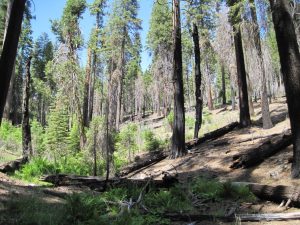
A resilient forest can bounce back after an event like a wildfire and still work the way it should. A healthy forest:
- does not burn too hot,
- provides good wildlife habitat,
- protects soil and water, and
- supports uses like recreation, scenic beauty, and wood products.
HEALTHY TREES ARE HARDY AND STRONG
They can handle drought, insects, and disease (like rot) and still survive. Healthy trees usually have:
- healthy foliage and full crowns (lots of green leaves or needles),
- enough space so they are not too crowded, and
- the water, nutrients, and sunlight they need to grow.
HEALTHY FORESTS SURVIVE FIRE AND WIND
Healthy forests are better able to survive when they have:
- few dead limbs,
- branches that start higher up the trunk,
- fewer tall shrubs or small trees below them (called ladder fuels), and
- space between trees or clumps of trees so fire is less likely to spread.
Dense, wall-to-wall forests are not natural here
We are used to seeing the forests the way they are now and think it's normal. But they burn very hot, trees are more easily stressed or killed by drought or insects. The forests today are not healthy. They are not resilient. They are more likely to burn very hot and endanger our communities, habitat, and scenery.
PAST SIERRA FORESTS WERE RESILIENT - WHY?
The Sierra Nevada has a Mediterranean climate with hot, dry summers and mild, wet winters. Because of this, forests burn easily in summer and fall.
Before European settlers arrived, lightning often started fires that burned for months. Indigenous people used low-intensity fire to improve food sources, basket materials, and safety around their homes. These fires naturally thinned forests and reduced fuels on the ground.
Forests were patchy, with clumps of trees, open areas, and different forest types mixed together. This pattern is called a forest mosaic.
WHAT HAS CHANGED?
For many years, most fires were put out quickly. This allowed forests to grow too dense. Soils are good here and plants grow fast. It's dry in the summer and fall, making decomposition, or natural breakdown of leaves and needles, slow. Live and dead vegetation, called fuels, build up on the ground and under trees.
Deep forest floor litter, needles and leaves, prevent water from getting down into the soil to tree and plant roots. With less moisture, they are drier and more flammable.
Today’s fires often burn hotter and faster. Fire can move into the tops of trees, causing crown fires. Large fires can even create their own weather, making them more dangerous and harder to control.