

Fire-smart landscaping
Fire-Smart Landscaping: Stop Fire from Reaching Your Home
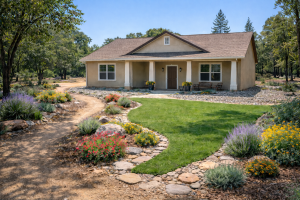 A fire-smart yard can
slow wildfire,
reduce ember ignition, and
give your home a better chance to survive.
The goal is simple:
break up fuels,
keep plants trimmed and healthy, and
keep the first 5 feet next to your home clear of anything that can burn.
Why Landscaping Matters
Key Figures to Know:
- Embers can travel over a mile ahead of a wildfire.
- Wind-blown embers are the biggest danger to homes.
- The first 5 feet around a house is the most critical area.
- Fire can spread when plants, mulch, and debris touch or form long lines.
- Smart yard design can slow fire and help firefighters protect houses.
Use Hardscaping to Break Up Plants
What is Hardscaping?
- Use of gravel, brick, stones or dirt that won't burn.
- Create small groups of plants with rock paths, stone patios, walkways, or walls between them.
- These hard surfaces do not burn and help slow fire.
- Fire can't move across your yard as easily.
Keeping Space Between Plants:
- Keep plants several feet apart, not touching.
- Trim tree branches 6–10 feet above the ground (as appropriate for the tree), so fire cannot climb up.
- Do not plant long rows or thick groups of shrubs, trees, or groundcover.
- Leave plenty of space between trees and shrubs
- Space plants more on steep slopes and in windy areas.
Keep Plants Healthy, Trimmed and Away from Your House
- Mow grass and thin crowded bushes.
- Keep branches about 10 feet away from roofs and chimneys.
- Water plants so they stay green and healthy. They can still burn but are less likely to catch fire as easily or right away.
- Remove dead leaves, needles, and branches often.
Mulch Matters — Most Types Burn
- Keep all flammable mulch away from the first 5 feet around your home.
- Use rock, gravel, or decomposed granite near your home instead. These materials do not burn and help stop fire from spreading.
- Wood chips, bark, and pine needles can catch fire easily. Do not put these near buildings, decks, or fences.
Design for Safety, Not Bare Ground
- You do not have to remove every plant.
- Focus on spacing, trimming, and breaking up fuel paths.
- Mix plants with stone and other fire-resistant materials.
- Keep up yard work all year so your home stays wildfire-ready.
Are there Some Plants that Are Better than Others?
- All plants can burn, even well watered ones. The heat from fire will dry out even the most well watered plant until it readily catches fire.
- Some plants burn more easily and hotter and should be avoided. Juniper, cedar, rosemary or any plant with fragrant smelling foliage has highly flammable oils.
- Native plants are often more drought tolerant and can survive fires but they still burn. They are a good choice for many reasons such drought tolerance and native pollinators.
- The best plants to have closest to your homes are succulents. They have a lot of water in the leaves. They are usually small. When they burn, they smolder or melt more than burn with flames.
- Non-native invasive plants and weeds, like starthistle, scotchbroom, and barb goat grass are especially flammable. Eliminate them whenever possible.
- The best advice is to keep plants well spaced, trimmed and clean and away from the house.
Reliable Sources
Fire-Smart Landscaping CAL FIRE
Safe Landscapes in the Wildland-Urban Interface UC Agriculture and Natural Resources
Tree Care Information from International Society of Arboriculture
Creating a Fire Resilient Landscape UC Agriculture and Natural Resources
Select Tree: A Tree Selection Guide CAL Poly
Invasive Weeds Awareness – California Native Plant Society